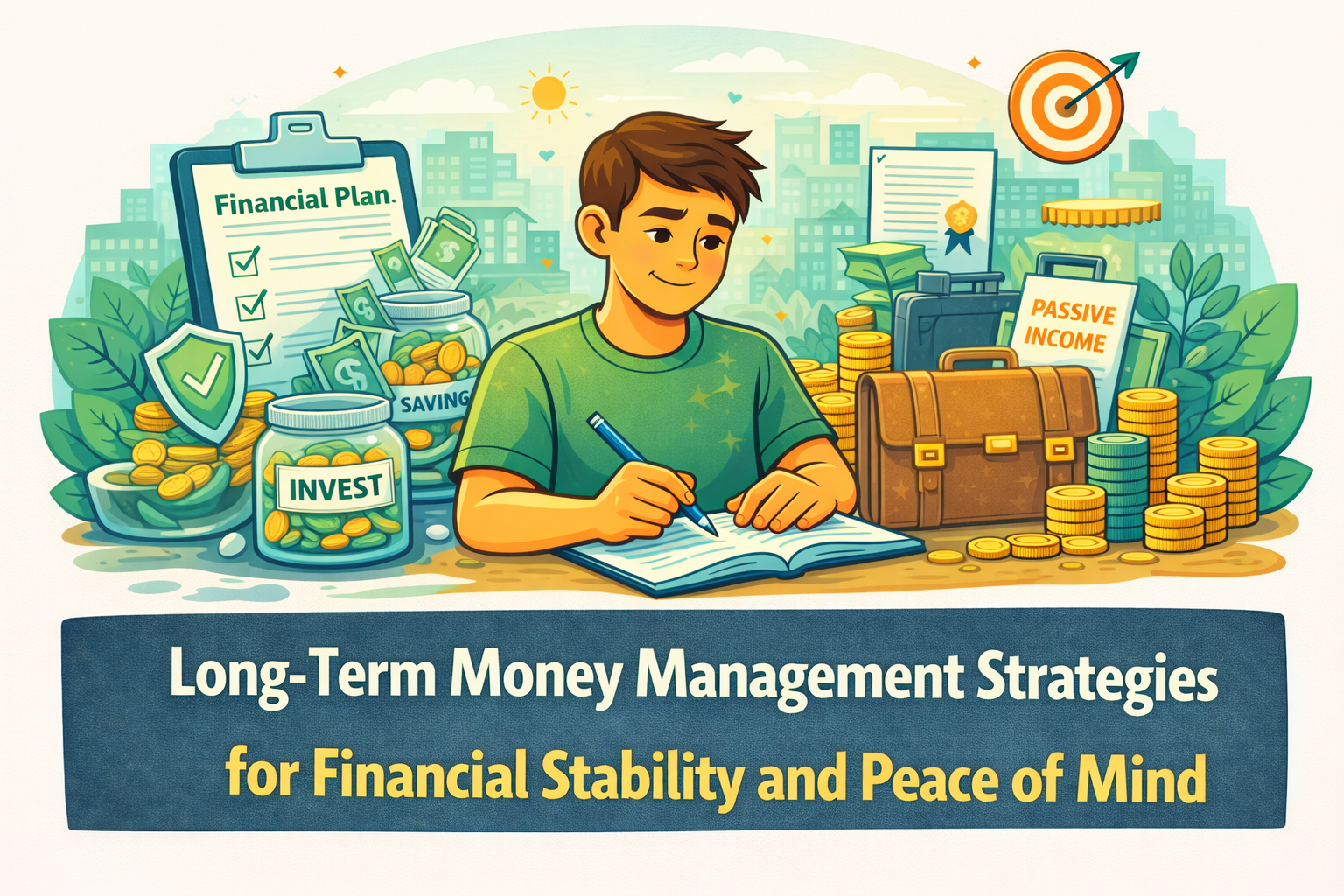
Financial stability is not about sudden wealth, perfect timing, or complex strategies. It is the result of long-term money management habits that quietly reduce stress, protect against uncertainty, and create confidence about the future. Many people focus on short-term fixes—cutting expenses for a month, chasing quick income boosts, or reacting to emergencies—while ignoring the systems that actually create peace of mind over time.
This article takes a deep, paragraph-based approach to long-term money management. It explains how to move from financial anxiety to financial calm by building strategies that work steadily in the background—without extreme sacrifice, risky behavior, or constant worry.
Table of Contents
- What Financial Stability Really Means
- Why Peace of Mind Matters More Than High Income
- Building a Strong Financial Foundation
- Managing Cash Flow for the Long Term
- Creating Systems Instead of Relying on Willpower
- The Role of Emergency Planning in Long-Term Stability
- Smart Saving as a Lifelong Strategy
- Managing Debt Without Letting It Control You
- Planning for Predictable Life Changes
- Protecting Your Finances from Shocks and Stress
- Aligning Lifestyle with Long-Term Goals
- Reviewing and Adjusting Your Strategy Over Time
- Final Thoughts
1. What Financial Stability Really Means
Financial stability does not mean being rich. It means having enough structure and preparation so that money problems do not control your emotions or decisions. A financially stable person can handle unexpected expenses, plan for the future, and make choices without panic.
Stability is not about perfection. It is about resilience—the ability to absorb shocks without falling apart. Long-term money management focuses on building this resilience gradually.
2. Why Peace of Mind Matters More Than High Income
Many high earners live with constant financial stress, while some moderate earners enjoy calm and confidence. The difference is not income—it is how money is managed.
Peace of mind comes from:
- Predictability
- Preparation
- Clarity
- Control
When money decisions are intentional and systems are in place, stress reduces naturally. Long-term strategies prioritize emotional stability alongside financial progress.
3. Building a Strong Financial Foundation
Every long-term strategy begins with a solid foundation. Without it, progress collapses during difficult periods.
A strong foundation includes:
- Clear understanding of income and expenses
- A realistic budget
- Basic savings
- Controlled debt
This foundation does not require high income—only consistency and honesty. Once the base is stable, growth becomes safer and easier.
4. Managing Cash Flow for the Long Term
Cash flow is the movement of money in and out of your life. Poor cash flow—not low income—is often the cause of financial stress.
Long-term cash flow management involves:
- Ensuring expenses are lower than income
- Avoiding spending spikes after paydays
- Planning for irregular costs
- Creating small buffers between income and expenses
When cash flow is stable, financial anxiety decreases significantly.
5. Creating Systems Instead of Relying on Willpower
Willpower is unreliable. Systems are reliable.
Long-term money management replaces emotional decisions with automatic systems, such as:
- Automated savings
- Scheduled bill payments
- Fixed budgeting rules
- Regular financial check-ins
These systems remove daily decision fatigue and ensure progress continues even during stressful periods.
6. The Role of Emergency Planning in Long-Term Stability
Emergencies are inevitable. Financial collapse during emergencies is optional.
Long-term stability requires:
- An emergency fund
- Clear rules for emergency spending
- Separation of emergency money from daily use
Emergency planning is not pessimism—it is preparation. It allows you to handle problems calmly instead of reactively.
7. Smart Saving as a Lifelong Strategy
Saving is not a phase—it is a permanent habit. Long-term money management treats saving as a core expense, not a leftover.
Smart saving focuses on:
- Consistency over amount
- Progress over perfection
- Long-term goals over short-term comfort
Over time, saving becomes automatic and emotionally neutral, reducing stress and increasing confidence.
8. Managing Debt Without Letting It Control You
Debt does not automatically destroy stability—but unmanaged debt does.
Long-term debt management includes:
- Clear repayment plans
- Avoidance of high-interest lifestyle debt
- Limited reliance on credit
- Focus on reducing financial obligations over time
Debt should support progress, not maintain survival.
9. Planning for Predictable Life Changes
Many financial crises are not surprises—they are unplanned certainties. Education costs, healthcare, family responsibilities, career changes, and aging all require preparation.
Long-term planning involves:
- Anticipating major expenses
- Saving gradually for life events
- Adjusting goals as responsibilities change
Planning reduces shock and allows smoother transitions.
10. Protecting Your Finances from Shocks and Stress
Protection is a key part of long-term peace of mind. Financial protection prevents setbacks from becoming disasters.
Protection strategies include:
- Emergency savings
- Insurance where appropriate
- Avoiding financial risks you don’t understand
- Maintaining flexibility in spending
Protecting progress is just as important as making progress.
11. Aligning Lifestyle with Long-Term Goals
A calm financial life requires alignment between lifestyle and long-term goals. When spending decisions contradict future plans, stress builds silently.
Alignment means:
- Enjoying life within sustainable limits
- Upgrading lifestyle slowly and intentionally
- Avoiding comparison-driven spending
- Choosing stability over appearance
When lifestyle matches financial capacity, peace of mind follows naturally.
12. Reviewing and Adjusting Your Strategy Over Time
Life changes, and so should your financial strategy. Long-term money management is not rigid—it is adaptive.
Regular reviews help you:
- Track progress
- Adjust goals
- Improve efficiency
- Respond to new challenges
Small adjustments prevent large problems later.
13. Final Thoughts
Long-term money management is not about chasing perfection or wealth—it is about building financial calm. Stability and peace of mind come from preparation, structure, and consistency, not from dramatic income changes or risky moves.
When your finances are managed intentionally, money stops being a constant source of stress and becomes a quiet support system for your life. Start small, stay consistent, and let time do the heavy lifting. Financial peace is not an accident—it is a result of thoughtful, long-term strategy.
Disclaimer
This article is for educational purposes only and does not constitute professional financial or investment advice.