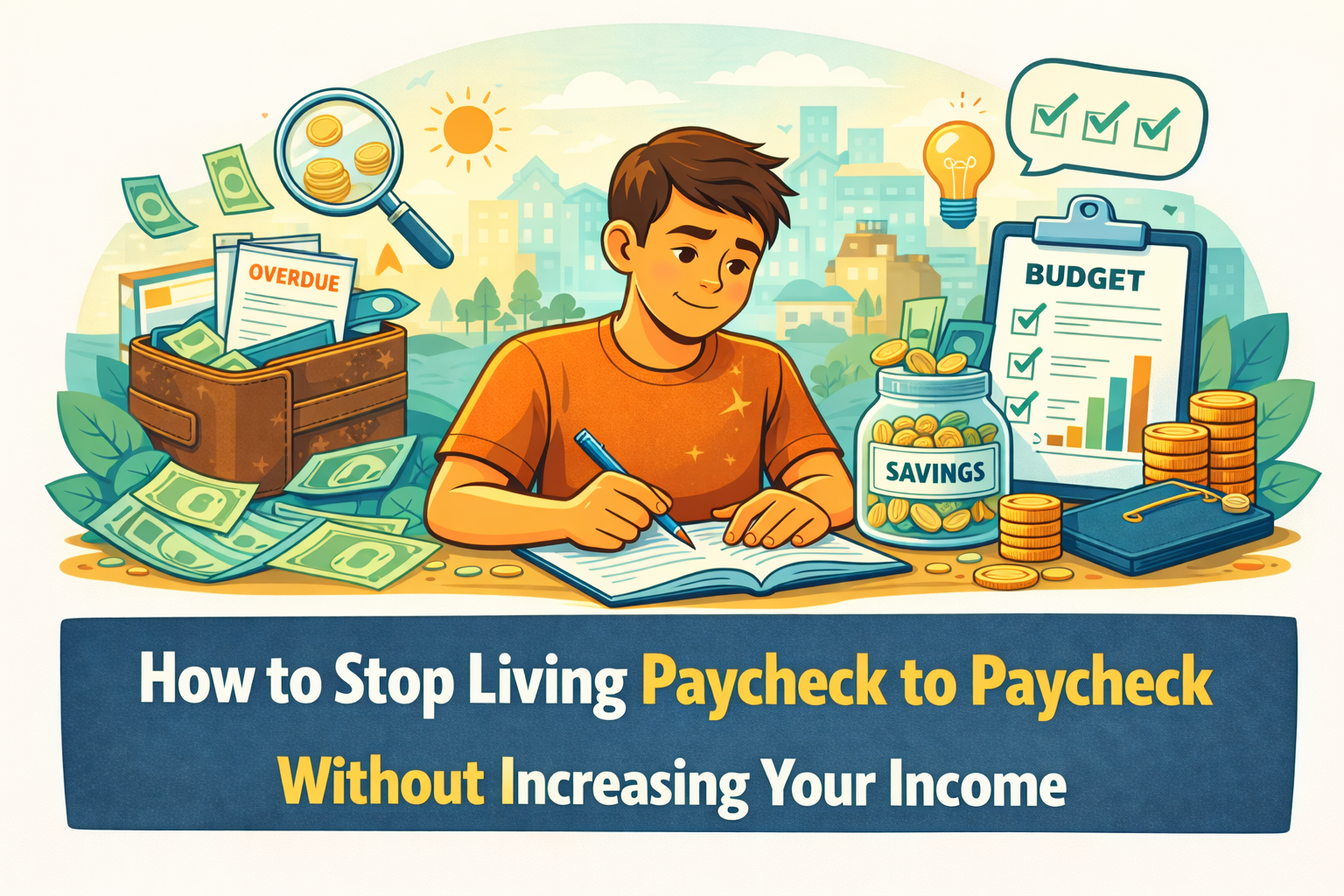
Living paycheck to paycheck is not always the result of low income. Many people earn enough to survive—and even save—but still find themselves running out of money before the month ends. The problem is rarely about how much you earn. It’s about how money flows through your life.
This guide explains, in a deep and practical way, how you can stop living paycheck to paycheck without increasing your income. It focuses on awareness, structure, and habits rather than unrealistic sacrifice or complicated strategies. The goal is financial breathing room, not deprivation.
Table of Contents
- Why Paycheck-to-Paycheck Living Persists
- Understanding the Real Cause of the Cycle
- Creating Financial Space Without Earning More
- Building a Budget That Breaks the Cycle
- Separating Survival Money from Lifestyle Money
- Managing Irregular and Forgotten Expenses
- Controlling Spending Without Feeling Restricted
- Building a Small Financial Buffer First
- Reducing Financial Stress and Decision Fatigue
- Changing Daily Money Habits
- Avoiding Lifestyle Comparison Traps
- Staying Out of the Paycheck Cycle Long Term
- Final Thoughts
1. Why Paycheck-to-Paycheck Living Persists
Living paycheck to paycheck often continues not because people are careless, but because their financial system has no buffer. Every rupee is assigned immediately, leaving no room for error.
One unexpected expense—a medical bill, a repair, or a delayed payment—can disrupt the entire month. Without a buffer, people rely on credit, borrowing, or delaying bills, which deepens the cycle.
The absence of flexibility—not income—is what keeps people stuck.
2. Understanding the Real Cause of the Cycle
At the core of paycheck-to-paycheck living is timing, not amount. Income comes in, expenses rush out, and nothing remains in between.
Most people:
- Spend as soon as income arrives
- Budget based on exact income
- Ignore irregular expenses
- Treat savings as optional
This leaves no margin for mistakes or surprises. Financial stability begins when money stops flowing out at the same speed it flows in.
3. Creating Financial Space Without Earning More
Breaking the cycle requires creating financial space—even a small amount. Financial space means having money that is not immediately assigned to spending.
This can be achieved by:
- Delaying non-essential purchases
- Prioritizing one small saving category
- Reducing waste, not comfort
The goal is not to save large amounts, but to slow down money flow so you regain control.
4. Building a Budget That Breaks the Cycle
Traditional budgets often fail because they plan for perfect months. A budget that breaks the paycheck cycle plans for imperfection.
A strong budget:
- Covers essentials first
- Includes savings as a fixed expense
- Plans for irregular costs
- Leaves room for adjustment
The budget’s purpose is to protect stability, not to restrict enjoyment.
5. Separating Survival Money from Lifestyle Money
One powerful shift is separating money needed for survival from money used for lifestyle.
Survival money includes:
- Rent
- Utilities
- Food
- Transport
Lifestyle money includes:
- Entertainment
- Shopping
- Non-essential upgrades
When survival money is protected first, lifestyle decisions become safer and more intentional.
6. Managing Irregular and Forgotten Expenses
Irregular expenses often push people back into paycheck-to-paycheck living. These include medical costs, gifts, repairs, and annual fees.
These expenses are not surprises—they are predictable. Planning for them monthly, even in small amounts, prevents sudden financial shocks.
This planning alone can break the paycheck cycle for many people.
7. Controlling Spending Without Feeling Restricted
Stopping paycheck-to-paycheck living does not require cutting all enjoyment. It requires controlling waste, not pleasure.
Effective control strategies include:
- Setting spending limits, not bans
- Delaying impulse purchases
- Focusing on value, not frequency
- Choosing planned enjoyment over random spending
When spending becomes intentional, money lasts longer naturally.
8. Building a Small Financial Buffer First
Many people aim for large savings immediately and give up when they fail. The smarter approach is to build a small buffer first.
Even a small amount of saved money:
- Absorbs minor shocks
- Reduces stress
- Prevents emergency borrowing
This buffer is the foundation of financial stability and confidence.
9. Reducing Financial Stress and Decision Fatigue
Constant money stress leads to poor decisions. When every purchase feels urgent, impulse spending increases.
Reducing decision fatigue by:
- Automating bills and savings
- Creating simple rules for spending
- Reviewing finances weekly
This mental clarity helps break emotional spending patterns that fuel the paycheck cycle.
10. Changing Daily Money Habits
Daily habits shape financial reality more than income level. Small changes repeated daily create lasting impact.
Healthy habits include:
- Tracking spending briefly
- Planning purchases
- Avoiding emotional buying
- Reviewing goals regularly
Consistency beats intensity when it comes to financial change.
11. Avoiding Lifestyle Comparison Traps
Comparison is one of the fastest ways to remain paycheck to paycheck. Other people’s lifestyles are often funded by debt, support, or stress you don’t see.
Your financial progress should be measured against your past—not someone else’s present. Financial peace comes from alignment, not appearance.
12. Staying Out of the Paycheck Cycle Long Term
Breaking the cycle once is not enough. Staying out requires:
- Regular reviews
- Budget adjustments
- Saving increases when possible
- Controlled lifestyle upgrades
Financial stability is maintained through habits, not one-time fixes.
13. Final Thoughts
Living paycheck to paycheck is not a personal failure—it is a structural problem that can be fixed. You don’t need more income to regain control. You need space, structure, and intention.
When money stops flowing out automatically and starts being directed deliberately, financial breathing room appears. Stability grows from small, consistent changes—not dramatic sacrifices.
Break the cycle once, protect the buffer, and your financial life will finally start moving forward.
Disclaimer
This article is for educational purposes only and does not constitute professional financial advice.