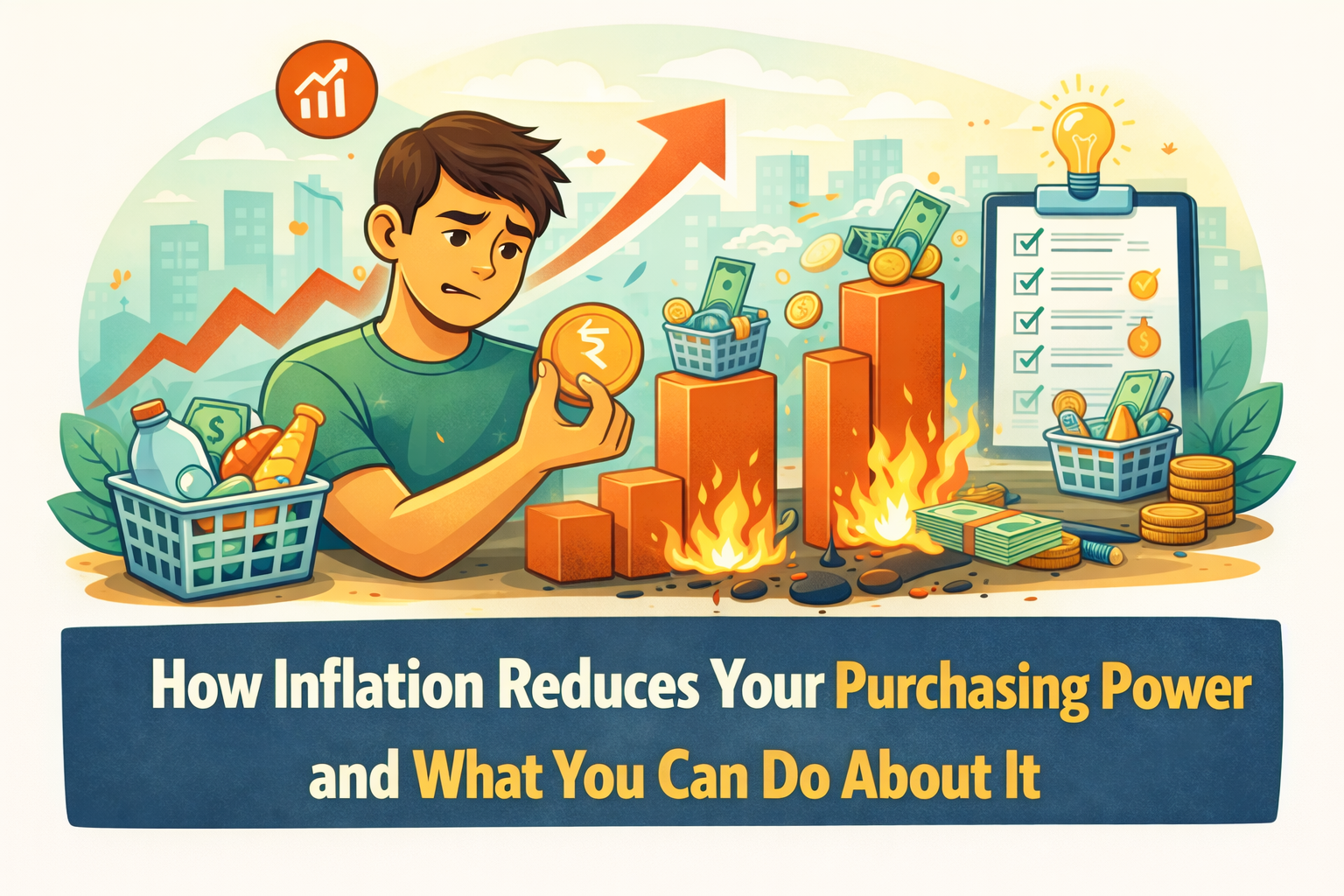
Inflation is one of the most misunderstood financial concepts, yet it affects everyone—whether you earn a salary, run a business, or live on savings. Many people feel its impact without fully understanding it. Prices rise, money feels tighter, and savings seem to lose value, even though income may stay the same. This silent erosion of money is called loss of purchasing power, and it happens gradually, often without warning.
This article explains how inflation works, how it quietly reduces your purchasing power over time, and what practical steps you can take to protect your finances. The goal is not theory, but real-world understanding that helps you make better money decisions.
Table of Contents
- What Inflation Really Means
- Understanding Purchasing Power
- How Inflation Slowly Shrinks Your Money
- Why Inflation Feels Worse Than Numbers Suggest
- Inflation’s Impact on Salaries and Savings
- How Inflation Affects Daily Living Costs
- The Hidden Damage Inflation Does to Cash Savings
- Common Mistakes People Make During Inflation
- What You Can Control (And What You Can’t)
- Smart Ways to Protect Your Purchasing Power
- Adjusting Your Budget in an Inflationary Period
- Long-Term Financial Habits That Beat Inflation
- Final Thoughts
1. What Inflation Really Means
Inflation refers to the general increase in prices over time. When inflation rises, the same amount of money buys fewer goods and services than before. In simple terms, money loses value.
Inflation is not always sudden or dramatic. Most of the time, it moves slowly—quietly increasing costs year after year. Because the change is gradual, people often adapt without realizing how much purchasing power they’ve lost.
Understanding inflation is essential because it affects every financial decision you make, from saving to spending to long-term planning.
2. Understanding Purchasing Power
Purchasing power refers to how much you can buy with a certain amount of money. If prices rise and your income does not, your purchasing power decreases.
For example, if groceries that once cost 5,000 now cost 6,500, your money buys less food than before. Even if your income stays the same, your standard of living slowly declines.
Purchasing power is the real measure of wealth—not how much money you earn, but how much that money can do for you.
3. How Inflation Slowly Shrinks Your Money
Inflation doesn’t take money out of your wallet—it reduces what your money can buy. This makes it more dangerous than sudden expenses because it feels invisible.
Over time:
- Savings lose real value
- Fixed incomes fall behind costs
- Long-term goals become harder to reach
This slow erosion is why people often feel financially stuck even when they are earning more than before.
4. Why Inflation Feels Worse Than Numbers Suggest
Official inflation numbers often don’t reflect individual experiences. Everyone spends money differently, so inflation feels higher for some than others.
If most of your income goes toward essentials like food, fuel, rent, or healthcare, inflation hits you harder. These categories often rise faster than average inflation rates.
This mismatch creates frustration and confusion, making it feel like money problems appear “out of nowhere.”
5. Inflation’s Impact on Salaries and Savings
One of the biggest problems with inflation is that salaries usually do not increase at the same pace. When income growth lags behind inflation, purchasing power declines even if paychecks rise slightly.
Savings suffer even more. Money sitting idle in cash loses value every year during inflationary periods. What feels safe may actually be slowly shrinking in real terms.
This is why understanding inflation is critical for long-term financial security.
6. How Inflation Affects Daily Living Costs
Inflation shows up first in everyday expenses:
- Food becomes more expensive
- Transportation costs increase
- Utility bills rise
- Healthcare costs grow
- Education becomes less affordable
Because these are unavoidable expenses, people often cut back on savings or rely on debt to maintain their lifestyle—creating long-term financial stress.
7. The Hidden Damage Inflation Does to Cash Savings
Many people believe keeping money in cash is the safest option. While it protects against sudden loss, it does not protect against inflation.
Over time, inflation quietly reduces the real value of cash savings. Money saved for future goals may no longer be enough when the time comes.
This doesn’t mean cash is bad—but it should be used strategically, not excessively.
8. Common Mistakes People Make During Inflation
Inflation often leads to emotional financial decisions, such as:
- Panic spending
- Hoarding goods unnecessarily
- Taking high-risk investments without understanding them
- Ignoring long-term planning
- Relying heavily on credit to maintain lifestyle
These reactions often cause more damage than inflation itself.
9. What You Can Control (And What You Can’t)
You cannot control inflation, government policies, or global markets. But you can control how you respond.
You can control:
- Spending habits
- Saving strategies
- Budget adjustments
- Financial education
- Long-term planning
Focusing on what you can control reduces stress and improves outcomes.
10. Smart Ways to Protect Your Purchasing Power
Protecting purchasing power doesn’t require complex strategies. It requires smart, disciplined habits.
Effective steps include:
- Avoid keeping all savings in idle cash
- Increase income through skills or side income
- Adjust savings targets regularly
- Focus on long-term financial growth
- Avoid lifestyle inflation
The goal is not to beat inflation overnight, but to outpace it gradually.
11. Adjusting Your Budget in an Inflationary Period
Inflation requires budget flexibility. Fixed budgets often fail when prices rise.
Smart adjustments include:
- Reviewing expenses regularly
- Reprioritizing needs over wants
- Planning for higher future costs
- Increasing savings when income allows
A budget should adapt to reality, not fight it.
12. Long-Term Financial Habits That Beat Inflation
Inflation rewards people who think long term. Habits that help include:
- Continuous learning
- Skill development
- Conscious spending
- Consistent saving
- Periodic financial reviews
Over time, these habits build resilience against rising costs.
13. Final Thoughts
Inflation is unavoidable, but financial damage from inflation is not. Understanding how purchasing power works gives you the clarity to make smarter decisions instead of reactive ones.
You don’t need to predict inflation or chase risky strategies. You need awareness, discipline, and adaptability. When you align your money habits with reality, inflation becomes a challenge you can manage—not a force that controls your life.
The goal is not just to earn more, but to protect what you earn.
Disclaimer
This article is for educational purposes only and does not constitute financial or investment advice.