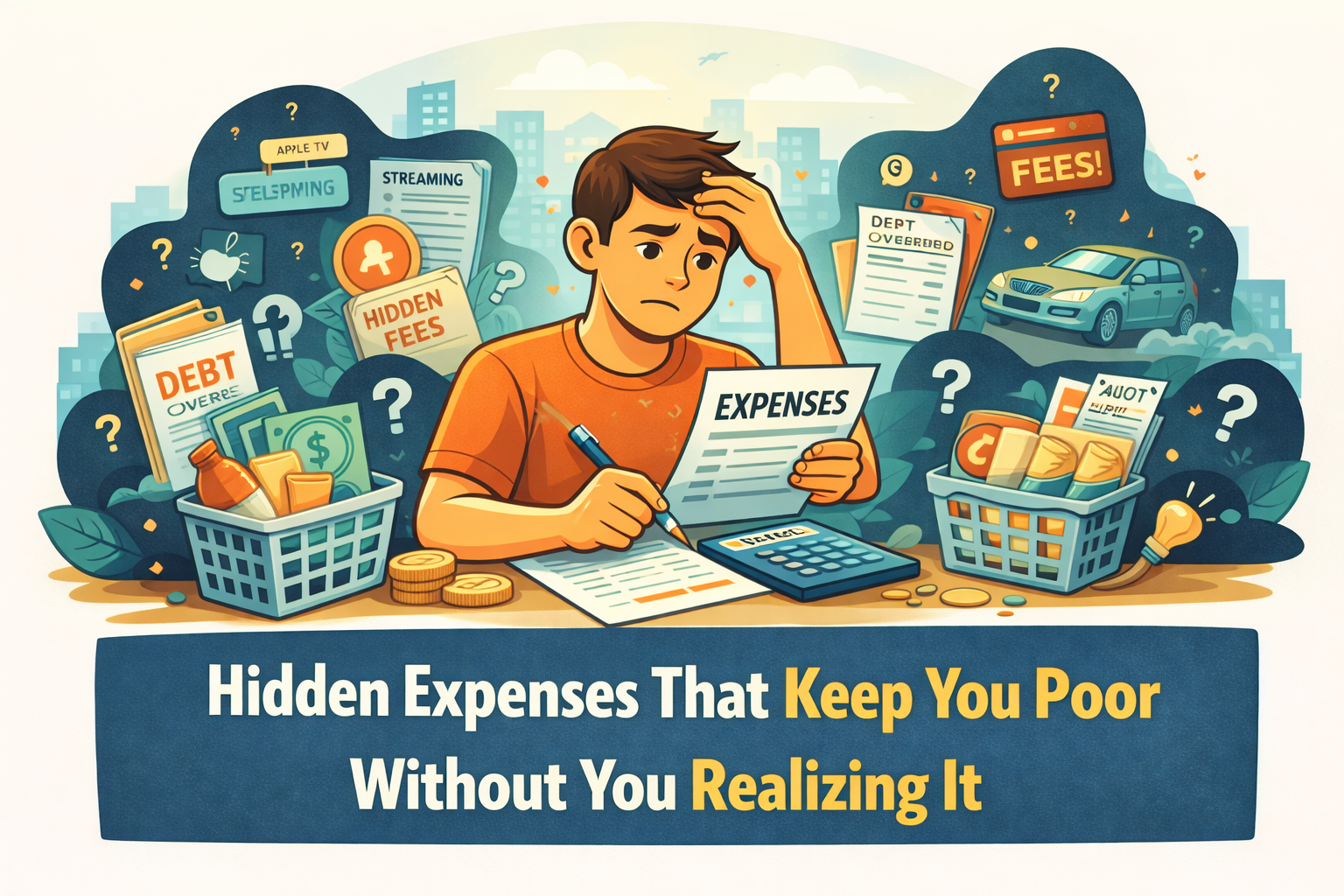
Many people believe they struggle financially because they don’t earn enough. While income does matter, the truth is often more uncomfortable: money is quietly leaking out in places we rarely notice. These hidden expenses don’t feel dangerous because they are small, familiar, and spread out over time. Yet together, they can keep you stuck for years—working hard but never moving forward.
This article takes a deep, paragraph-based approach to uncover the hidden expenses that silently drain your money, delay your goals, and keep you feeling financially stressed without a clear reason. More importantly, it explains how to identify and fix these leaks without destroying your lifestyle.
Table of Contents
- Why Hidden Expenses Are More Dangerous Than Big Ones
- Subscription Traps You Forgot You’re Paying For
- Convenience Spending That Feels Harmless
- Bank Fees and Financial Service Charges
- Lifestyle Inflation You Don’t Notice
- Poor Planning and Last-Minute Spending
- Emotional Spending Disguised as “Self-Care”
- Cheap Purchases That Cost More Over Time
- Food Waste and Unplanned Eating
- Ignoring Irregular and Annual Expenses
- Time-Related Expenses That Drain Money
- How Hidden Expenses Keep You Financially Stuck
- How to Find and Fix Money Leaks
- Final Thoughts
1. Why Hidden Expenses Are More Dangerous Than Big Ones
Big expenses are easy to spot. Rent, bills, and major purchases get attention because they feel serious. Hidden expenses, on the other hand, feel insignificant. They don’t trigger alarm bells because they are small, frequent, and familiar.
This is what makes them dangerous. A few small expenses repeated daily or weekly can cost more than a single large purchase over a month. Because they don’t feel painful, they continue unchecked—quietly draining savings and delaying progress.
Financial damage is rarely caused by one bad decision. It is caused by many small ignored ones.
2. Subscription Traps You Forgot You’re Paying For
Subscriptions are one of the most common hidden expenses today. Streaming services, apps, cloud storage, memberships, and digital tools often renew automatically without notice.
Because payments are small and automatic, they escape attention. Over time, multiple unused or rarely used subscriptions quietly eat into monthly income.
The real problem is not one subscription—it’s subscription accumulation. Many people pay for services they barely remember signing up for.
3. Convenience Spending That Feels Harmless
Convenience is expensive—but it rarely feels that way in the moment. Food delivery, ride services, quick online orders, and express options save time but cost significantly more than planned alternatives.
Because these expenses feel justified (“I was tired,” “I didn’t have time”), they don’t feel like overspending. But convenience spending often becomes a habit rather than an occasional choice.
Over time, convenience quietly replaces planning—and planning is where savings are born.
4. Bank Fees and Financial Service Charges
Banking-related expenses are often invisible because they are deducted automatically. Service fees, late fees, transaction charges, and penalties quietly reduce balances without emotional impact.
Individually, these charges seem minor. Collectively, they represent money paid for nothing of real value.
Many people never question these deductions, assuming they are unavoidable. In reality, awareness and simple changes often eliminate them.
5. Lifestyle Inflation You Don’t Notice
Lifestyle inflation doesn’t always come with luxury upgrades. Sometimes it appears subtly—slightly better food, more frequent outings, upgraded services, or higher expectations.
Because changes happen gradually, spending increases without conscious decision-making. Income rises a little, expenses follow quietly, and savings remain unchanged.
This hidden form of inflation keeps people stuck at the same financial level regardless of income growth.
6. Poor Planning and Last-Minute Spending
Lack of planning is expensive. When expenses are not anticipated, people pay more for urgency—rush fees, premium prices, or impulse decisions.
Last-minute travel, emergency shopping, and unplanned events often cost far more than prepared alternatives. These costs feel unavoidable, but they are usually predictable.
Poor planning doesn’t just cost money—it creates stress that leads to more poor decisions.
7. Emotional Spending Disguised as “Self-Care”
Emotional spending often hides behind reasonable labels like “reward,” “stress relief,” or “self-care.” While self-care is important, emotional spending becomes harmful when it replaces intentional financial decisions.
Stress, boredom, and comparison often drive purchases that don’t provide lasting satisfaction. The emotional relief fades quickly, but the financial impact remains.
Because emotional spending feels justified, it is rarely questioned—making it one of the most powerful hidden expenses.
8. Cheap Purchases That Cost More Over Time
Buying the cheapest option often feels like saving money, but it can be more expensive in the long run. Low-quality items wear out faster, need replacement, and create ongoing costs.
This cycle of repeated purchases quietly drains money and increases frustration. Spending slightly more on durability often saves money over time while improving quality of life.
True savings come from value, not price alone.
9. Food Waste and Unplanned Eating
Food-related expenses are one of the biggest hidden money leaks. Groceries that expire unused, impulse snacks, frequent takeout, and unplanned meals quietly inflate monthly spending.
Because food is a necessity, overspending feels unavoidable. But much of this cost comes from waste and lack of planning—not hunger.
Reducing food waste often saves more money than cutting entertainment or lifestyle expenses.
10. Ignoring Irregular and Annual Expenses
Annual and irregular expenses don’t feel real until they arrive. Medical costs, repairs, gifts, school fees, and renewals often come as “surprises,” even though they happen every year.
When these costs aren’t planned for, savings disappear or debt increases. These expenses are not emergencies—they are unbudgeted certainties.
Ignoring them creates a cycle of financial setbacks that feel random but are actually predictable.
11. Time-Related Expenses That Drain Money
Time mismanagement often leads to higher spending. When time is scarce, people pay more to save it—fast food, convenience services, express fees.
While time is valuable, consistently trading money for poor planning quietly increases expenses. Better time management often reduces spending without lifestyle sacrifice.
Money and time are deeply connected—and misusing one often damages the other.
12. How Hidden Expenses Keep You Financially Stuck
Hidden expenses don’t just reduce savings—they block progress. They prevent emergency funds from growing, delay debt repayment, and make long-term goals feel impossible.
Because these expenses are invisible, people blame income instead of habits. This creates frustration, self-doubt, and financial burnout.
Once hidden expenses are controlled, financial progress often appears faster without earning more.
13. How to Find and Fix Money Leaks
Fixing hidden expenses starts with awareness, not restriction.
Effective steps include:
- Reviewing bank statements monthly
- Listing all subscriptions
- Tracking spending categories honestly
- Questioning automatic payments
- Planning for predictable costs
The goal is not to eliminate enjoyment, but to remove waste disguised as normal spending.
14. Final Thoughts
Hidden expenses are the silent enemies of financial progress. They don’t announce themselves, and they don’t feel dangerous—but they quietly shape your financial reality.
The moment you identify and control these leaks, money starts behaving differently. Savings grow, stress reduces, and goals feel achievable. You don’t need extreme discipline—you need visibility and intention.
Fix the leaks, and your financial life becomes lighter, clearer, and more secure.
Disclaimer
This article is for educational purposes only and does not constitute financial or professional financial advice.