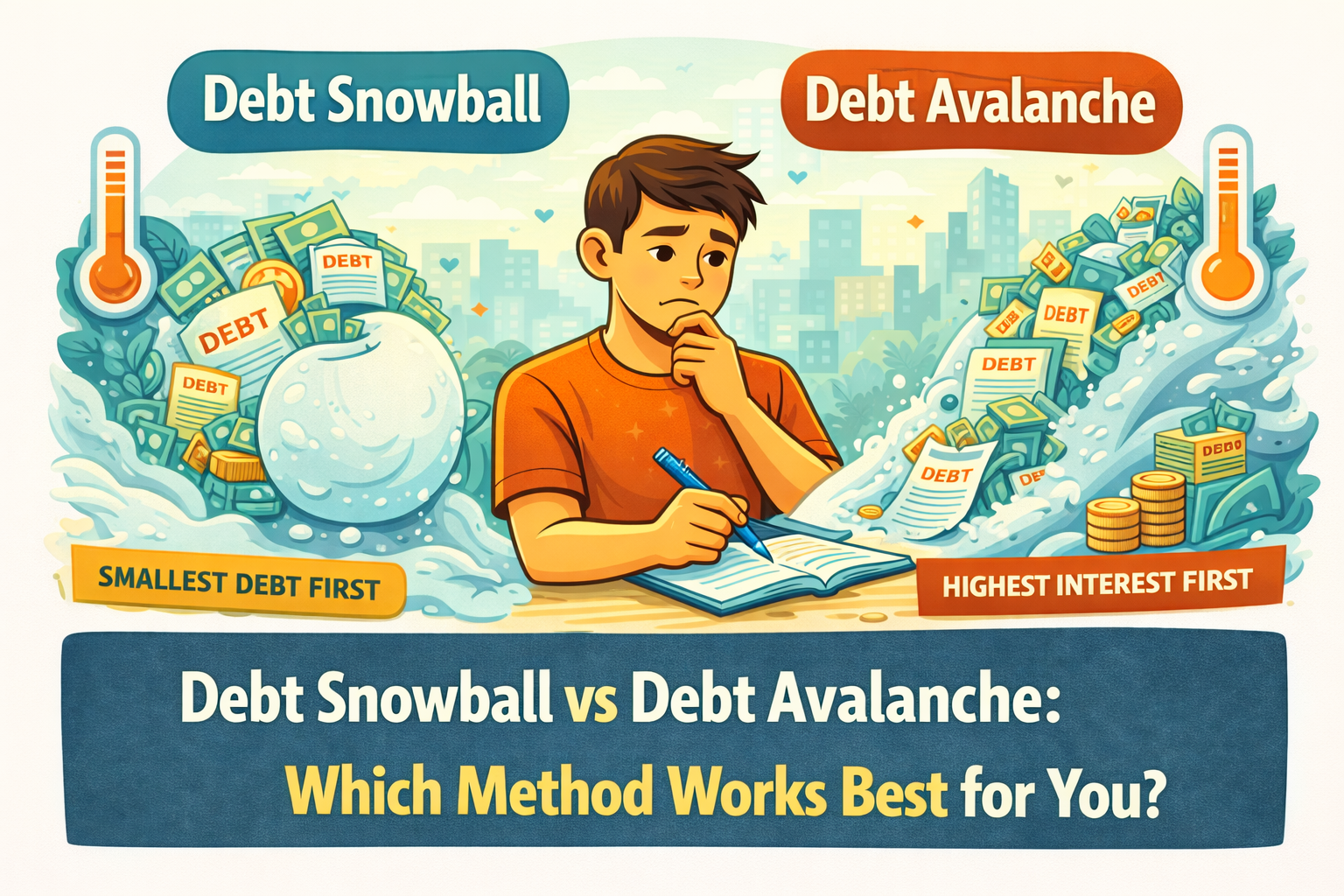
Getting out of debt is rarely about mathematics alone. If it were, everyone would simply choose the strategy with the lowest interest and be done with it. In reality, debt repayment is deeply emotional, psychological, and behavioral. This is why two popular methods—the Debt Snowball and the Debt Avalanche—exist. Both work, but they work best for different types of people.
This article takes a paragraph-based, real-life approach to explain how both methods work, why people succeed or fail with them, and how to choose the one that fits your personality, income style, and mindset. The goal is not just paying off debt—but staying debt-free long term.
Table of Contents
- Why the Right Debt Strategy Matters
- Understanding the Debt Snowball Method
- Understanding the Debt Avalanche Method
- The Psychological Side of Debt Repayment
- Motivation vs Mathematics: The Core Difference
- How Each Method Affects Long-Term Cost
- Which Method Works Better for Irregular Income
- Common Mistakes That Ruin Both Methods
- How to Choose the Best Method for You
- Can You Combine Both Methods?
- Staying Debt-Free After Repayment
- Final Thoughts
1. Why the Right Debt Strategy Matters
Debt repayment is not just about eliminating balances—it’s about changing behavior. Many people start strong, lose motivation, and fall back into debt. The method you choose should support your psychology, not fight against it.
A strategy that looks perfect on paper but feels overwhelming in real life often fails. The best debt method is the one you can stick to consistently, even during difficult months.
2. Understanding the Debt Snowball Method
The Debt Snowball method focuses on paying off debts from smallest balance to largest, regardless of interest rate. You make minimum payments on all debts and direct extra money toward the smallest balance first.
Once the smallest debt is cleared, you roll that payment into the next smallest debt, creating a “snowball” effect. Each payoff builds momentum and confidence.
This method prioritizes emotional wins. Seeing debts disappear quickly creates motivation, which helps people stay committed to repayment.
3. Understanding the Debt Avalanche Method
The Debt Avalanche method takes a different approach. It focuses on paying off debts with the highest interest rate first, while making minimum payments on the rest.
Mathematically, this method saves more money over time because it reduces interest faster. Once the highest-interest debt is eliminated, payments move to the next highest rate.
The avalanche method is financially efficient, but progress can feel slower—especially if the highest-interest debt also has a large balance.
4. The Psychological Side of Debt Repayment
Debt creates stress, guilt, and fatigue. For many people, motivation matters more than logic. This is where the snowball method shines.
Quick wins:
- Reduce emotional burden
- Increase confidence
- Reinforce discipline
On the other hand, some people feel more motivated knowing they are minimizing total cost. For them, the avalanche method feels empowering rather than discouraging.
Understanding your emotional response to debt is critical when choosing a method.
5. Motivation vs Mathematics: The Core Difference
The real difference between snowball and avalanche is behavioral.
The snowball method works because it:
- Creates early success
- Feels achievable
- Reduces overwhelm
The avalanche method works because it:
- Saves more money
- Ends debt more efficiently
- Appeals to logic-driven individuals
Neither method is “better” universally. One is emotionally efficient, the other financially efficient.
6. How Each Method Affects Long-Term Cost
From a purely mathematical perspective, the avalanche method usually results in lower total interest paid. Over years, this difference can be significant.
However, a method that saves money only works if it is completed. If the avalanche method causes burnout and abandonment, it becomes more expensive than a completed snowball plan.
Completion beats optimization every time.
7. Which Method Works Better for Irregular Income
For people with irregular or fluctuating income, motivation and flexibility matter more than perfect calculations.
The snowball method often works better in this case because:
- Smaller debts can be cleared during good months
- Progress remains visible despite income changes
- Momentum reduces stress during low-income periods
However, disciplined individuals with predictable extra income may still succeed with the avalanche method.
8. Common Mistakes That Ruin Both Methods
Both strategies fail when basic rules are ignored.
Common mistakes include:
- Continuing to add new debt
- Skipping minimum payments
- Using credit cards “temporarily”
- Not adjusting budgets
- Giving up after slow months
Debt methods work only when spending behavior changes alongside repayment.
9. How to Choose the Best Method for You
Ask yourself:
- Do I need motivation or efficiency more?
- Do I feel encouraged by quick wins?
- Can I stay disciplined without visible progress?
- Is my income stable or irregular?
If motivation is your weakness, choose snowball.
If discipline is your strength, choose avalanche.
The right method feels sustainable, not stressful.
10. Can You Combine Both Methods?
Yes—and many successful people do.
A hybrid approach might involve:
- Clearing one or two small debts for momentum
- Then switching to avalanche for remaining balances
This combines emotional wins with financial efficiency, creating a balanced approach.
11. Staying Debt-Free After Repayment
Paying off debt is only half the journey. Staying debt-free requires:
- Emergency savings
- Better budgeting
- Controlled lifestyle upgrades
- Conscious credit use
Without these changes, cleared debt often returns in a different form.
12. Final Thoughts
The debate between debt snowball and debt avalanche is not about right or wrong—it’s about fit. The best method is the one that aligns with your mindset, income, and behavior.
Debt freedom is not achieved through perfect math, but through consistent action. Choose the strategy you can follow through to the end. Because a completed plan—any plan—is far more powerful than an abandoned perfect one.
Get out of debt first. Optimize later. Your future self will thank you.
Disclaimer
This article is for educational purposes only and does not constitute professional financial advice.