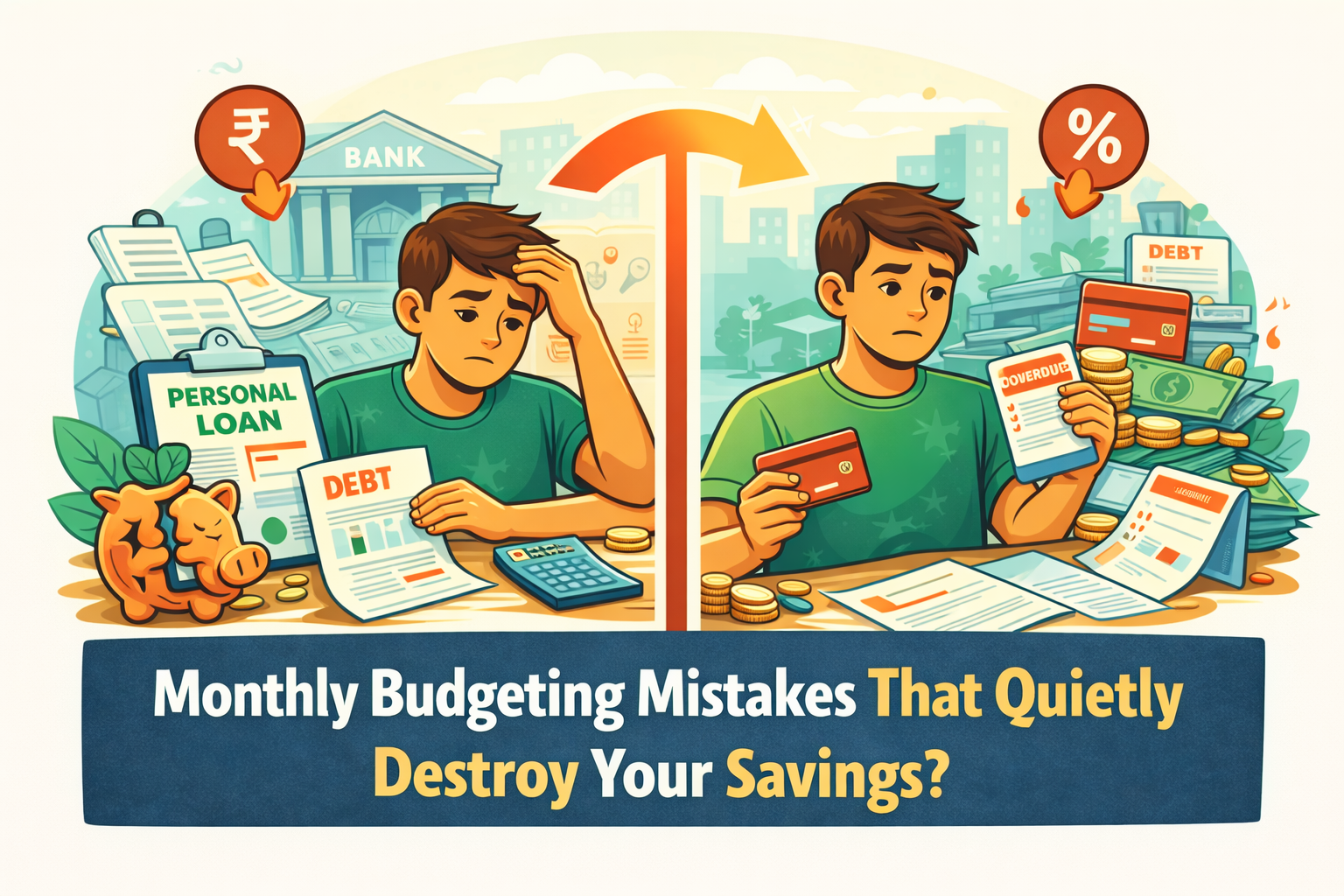
When money gets tight, two options usually appear first: a personal loan or a credit card. Both provide quick access to funds, and both can feel like a solution in the moment. However, the long-term impact of each option can be very different. Many people fall into years of financial stress not because they borrowed money—but because they borrowed it the wrong way.
This article takes a deep, paragraph-based approach to compare personal loans and credit card debt from a long-term financial perspective. Instead of focusing only on interest rates, we will look at behavior, repayment structure, psychological impact, and overall financial damage—so you can understand which option hurts less over time and why.
Table of Contents
- Why This Comparison Matters
- Understanding Personal Loans
- Understanding Credit Card Debt
- Interest Rates: The Silent Wealth Killer
- Repayment Structure and Discipline
- The Psychological Trap of Credit Cards
- Long-Term Cost Comparison
- Impact on Monthly Cash Flow
- Debt Cycles and Repeat Borrowing
- Credit Score and Financial Reputation
- When a Personal Loan Makes More Sense
- When Credit Card Debt Is Less Harmful
- Common Mistakes People Make
- How to Choose the Lesser Evil
- Final Verdict
1. Why This Comparison Matters
Many people compare loans and credit cards only at the moment of borrowing, not at the end of repayment. The real damage of debt is not felt immediately—it appears slowly through interest accumulation, stress, and reduced financial freedom.
Choosing the wrong type of debt can turn a short-term problem into a long-term burden. Understanding how each option behaves over time helps you avoid mistakes that silently cost you years of progress.
2. Understanding Personal Loans
A personal loan is usually a fixed amount borrowed for a fixed period, with a fixed repayment schedule. Once approved, the loan amount is deposited into your account, and you repay it through equal monthly installments.
The biggest advantage of a personal loan is predictability. You know exactly:
- How much you borrowed
- How much you’ll repay monthly
- When the debt will end
This structure creates discipline. Even if motivation fades, the system forces repayment.
3. Understanding Credit Card Debt
Credit card debt works very differently. Instead of a fixed loan, you get a revolving credit limit that allows repeated borrowing as long as minimum payments are made.
This flexibility is convenient—but dangerous. Credit cards encourage:
- Partial payments
- Continuous borrowing
- Long-term interest accumulation
Because there is no clear “end date,” many people remain in credit card debt for years without realizing how much it is costing them.
4. Interest Rates: The Silent Wealth Killer
Interest is where the real damage happens.
Credit cards usually carry much higher interest rates than personal loans. Even if the monthly payment feels small, the interest continues to grow on the remaining balance.
Personal loans generally have lower and fixed interest rates, meaning:
- Interest cost is predictable
- Total repayment amount is known
- Debt reduces steadily over time
In the long run, high-interest revolving debt almost always hurts more than structured installment debt.
5. Repayment Structure and Discipline
Personal loans force discipline. Monthly installments remain the same, and the loan ends on a specific date. This creates a clear finish line, which helps borrowers stay focused.
Credit cards, on the other hand, allow minimum payments that barely reduce the balance. This creates the illusion of progress while keeping you trapped.
Over time, lack of structure often leads to:
- Slower debt reduction
- Increased interest payments
- Financial fatigue
Discipline is built into personal loans, but optional with credit cards.
6. The Psychological Trap of Credit Cards
Credit cards disconnect spending from pain. Swiping a card feels easier than handing over cash or seeing a loan balance decrease.
This psychological distance encourages:
- Overspending
- Impulse purchases
- Emotional spending
With personal loans, the money is already spent, and each payment feels like progress. With credit cards, spending and repayment are mixed together, making control harder.
7. Long-Term Cost Comparison
In the long term, credit card debt almost always costs more—even if the borrowed amount is smaller. High interest, long repayment periods, and repeated borrowing increase total cost significantly.
Personal loans may seem expensive upfront, but they usually:
- End faster
- Accumulate less interest
- Cause less behavioral damage
The real cost of debt is not just money—it’s time and opportunity lost.
8. Impact on Monthly Cash Flow
Credit cards feel lighter on monthly cash flow because minimum payments are low. However, this is deceptive. Low payments stretch debt over many years, increasing total cost.
Personal loans require higher monthly payments, but they:
- End sooner
- Reduce financial uncertainty
- Free up future income faster
Short-term comfort often leads to long-term pain, while short-term pressure can lead to long-term relief.
9. Debt Cycles and Repeat Borrowing
One of the biggest dangers of credit card debt is the cycle of re-borrowing. As soon as you pay down some balance, the available limit tempts you again.
Personal loans do not offer this temptation. Once the loan is taken, there is no revolving credit to fall back on. This limits repeat borrowing and helps break debt cycles.
10. Credit Score and Financial Reputation
Both types of debt affect your credit score, but in different ways.
Credit card debt can harm your score if:
- Balances remain high
- Credit utilization stays elevated
- Payments are delayed
Personal loans can improve your credit profile if paid on time because they show structured repayment behavior.
Long-term, disciplined repayment helps more than flexible borrowing.
11. When a Personal Loan Makes More Sense
A personal loan is usually the better choice when:
- You need a large amount
- You want a clear repayment timeline
- You are consolidating high-interest debt
- You need structure and discipline
It is especially effective for people who struggle with impulse spending.
12. When Credit Card Debt Is Less Harmful
Credit cards can be less harmful when:
- The amount is very small
- You can repay in full quickly
- No interest is charged
- The spending is planned and controlled
Used carefully, credit cards can be tools. Used carelessly, they become traps.
13. Common Mistakes People Make
Some common mistakes include:
- Paying only the minimum balance
- Using credit cards to cover lifestyle gaps
- Taking loans without a repayment plan
- Mixing new spending with old debt
- Ignoring long-term cost
Debt decisions should be strategic, not emotional.
14. How to Choose the Lesser Evil
Ask yourself:
- Do I need structure or flexibility?
- Can I control impulse spending?
- How long will repayment realistically take?
- What is the total cost over time?
The answer usually points toward the option that causes less long-term damage, not short-term comfort.
15. Final Verdict
In the long run, personal loans usually hurt less than credit card debt, provided they are used responsibly. Their structured nature, lower interest, and clear end date make them easier to manage and less likely to spiral out of control.
Credit cards, while convenient, often cause more long-term financial harm due to high interest, weak repayment discipline, and repeated borrowing.
Debt itself is not the enemy—poorly chosen debt is. The smarter choice is the one that reduces stress, ends sooner, and protects your financial future.
Disclaimer
This article is for educational purposes only and does not constitute financial or legal advice